Cats&Soup: Relaxing Cozy Games
- 4.6
- Rating
- 10.00M
- Installs
- Free
- Price

 Analysis by App-foxy
I opened Cats&Soup expecting a simple idle game and found something better suited to short, quiet breaks than to long gaming sessions. Its world is built around cute cats preparing food in a peaceful forest, and the relaxed presentation makes it easy to check in without feeling rushed. I would describe it as a cozy simulation game first and an idle game second: progress continues through routine activity, while my main job is deciding what to improve and when to spend resources.
That distinction matters if you are choosing something for a shared phone or tablet. One person can enjoy decorating and collecting, another can simply watch the cats work, and neither needs to master complicated controls. At the same time, it is still a personal progression game, so sharing one save can create confusion if several people make upgrades without discussing them. My household verdict is positive, but with one practical condition: agree on who manages the main progress before everyone starts tapping.
How the game feels during an ordinary day
The most convincing use case is a small pause between other tasks. I might open the game while waiting for a kettle to boil, collect accumulated rewards, check the kitchen area, and make one or two upgrades before closing it again. The loop is deliberately gentle. There is no need to react instantly, and the game does not demand a long uninterrupted session to feel worthwhile.
You May Also Like

 Blood Strike: 2.5 Anniversary
Blood Strike’s Loadouts Turn Every Drop Into a Tactical Gamble
A close look at Blood Strike’s custom loadouts: how fast access to signature weapons reshapes its battle royale rhythm, rewards preparation, and narrows the gap between fights.

 Pandora - Music & Podcasts
Pandora’s Music Is Easy to Start, but Harder to Recover
Pandora’s strength is its low-effort path from a seed to a station. Its weak spot is how much confidence it asks you to place in connection, setup, and quiet recovery.

 8 Ball Pool
 Is Built on Rivalries, Rematches, and Routine
A close look at the rivalries, rematches, shared routines, and unanswered safety questions that turn a quick pool match into a persistent mobile community.

 Samsung Music
’s Quiet Strength Is Playing What You Already Own
Its reach comes less from spectacle than from dependable access to a personal library. That simplicity is both the app’s strongest retention engine and its ceiling.

 AccuWeather: Weather Radar
AccuWeather Review: A Quick, Clear Forecast for Everyday Decisions
For everyday plans, the best forecast is the one you can understand quickly. AccuWeather makes rain timing, radar, and local conditions easy to act on, with a few trade-offs.

 Hill Climb Racing
Why Hill Climb Racing Still Turns Crashes Into One More Run
A tiny car, a bumpy hill and one more upgrade: Hill Climb Racing keeps resurfacing because its simple chaos makes every near-miss feel personal.
More From Our News Desk



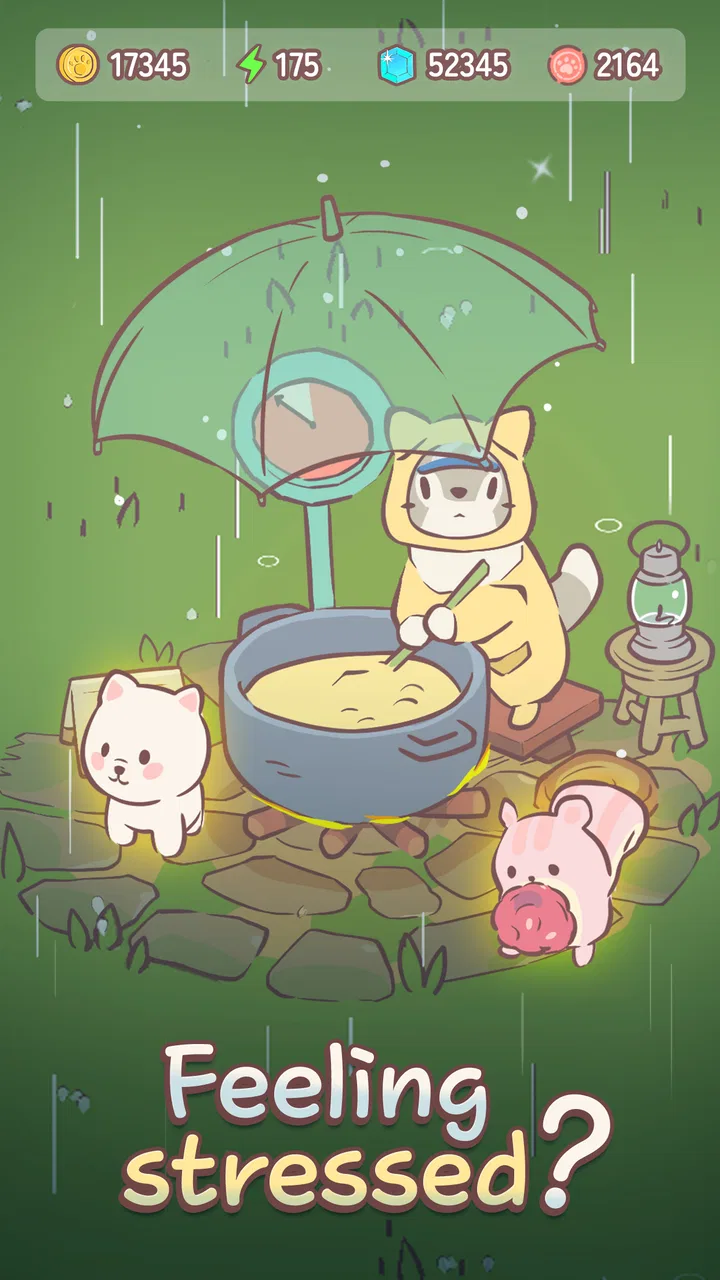
The cats cook, the environment gradually fills out, and the sense of improvement comes from turning a sparse woodland setting into a busier little food-producing space. I enjoy that the visual reward is not separated from the practical one. New activity makes the scene feel more alive, while better production helps the next upgrade arrive sooner. That connection gives the idle structure a little more personality than a menu full of counters.
For a shared device, this makes the game approachable. A child can enjoy the animals and animations, while an adult may be more interested in planning upgrades. Someone who does not normally play simulation games can still understand the basic rhythm almost immediately. The game is free to start, and its content rating is Everyone, which fits its soft presentation and non-threatening theme.
Still, I would not call it a universal family game. The same relaxed loop that makes it accessible can feel repetitive to somebody who wants direct control, competition, puzzles, or a clear campaign ending. If your household usually prefers fast action or games with a strong narrative, this may look charming for a few minutes and then lose its pull. It works best when the goal is comfort and gradual collection rather than challenge.
Why the idle structure works
The clever part of the loop is that it gives me useful choices without making every choice urgent. I can improve the parts of the operation that help production, or spend attention on the collection and visual side of the experience. That creates a pleasant split between efficiency and enjoyment. I do not have to optimize every decision to keep moving, but I can think more carefully when I want the game to last longer.
My most useful habit was to avoid spending every resource the moment it appeared. I first look at which upgrade will remove the biggest bottleneck in my current setup, then I keep a small reserve for the next visit. This prevents the familiar idle-game problem of making several tiny purchases that feel active but do not noticeably change progress. It also makes the short check-in feel intentional rather than automatic.
Another practical tip is to treat the game as a routine rather than a destination. A quick visit in the morning, a second check later, and a longer decorating or collecting session when I have time feels more satisfying than leaving it open constantly. The game is designed around gradual accumulation, so trying to force rapid progress can make its calm pace feel slow.
Shared-device boundaries before anyone begins
On a household tablet, I would decide in advance whether the game belongs to one player or is a communal project. The reason is simple: an idle simulation records progress through upgrades and collections, and those choices are not necessarily reversible in the way a board game move might be. A younger player may spend a resource because an item looks appealing, while an older player may have been saving for a more important improvement.
A useful arrangement is to give one person responsibility for major spending while letting everyone participate in harmless browsing and visual decisions. For example, one player can manage production upgrades, and another can choose which cats or decorations to focus on. This keeps the shared experience cooperative without pretending that every decision has equal consequences.
I would also create a simple verbal rule: ask before making a large purchase, and do not open the game while someone else is actively planning. That sounds obvious, but it prevents the most common shared-save argument. The game itself is relaxing; the disagreement usually comes from different ideas about what the next goal should be.
There is another boundary worth considering: the device owner should know whether in-game purchases are possible before handing the device over. The game is free, but optional purchases range from $0.49 to $84.99 per item. I would not leave a child to interpret those choices alone, especially on a device used by several people. A shared-device rule about spending is more important here than a rule about playtime.
Coordinating progress without turning it into homework
Coordination works best when the household chooses a small shared target. Instead of arguing over every upgrade, decide that the next session will focus on expanding production, collecting a particular type of cat, or improving the look of the forest. The target gives each visit a purpose while preserving the relaxed feeling.
I also recommend checking the current state before tapping quickly. Idle games encourage rapid collection, but in this one a few seconds of observation can reveal what has changed and what deserves attention. On a shared tablet, that pause is especially useful because it lets the next player understand the plan rather than accidentally replacing it with a different one.
For younger users, I would frame the game as a digital garden with cooking rather than as an economy to optimize. That keeps the focus on care, discovery, and visual progress. Older players can naturally introduce resource planning later. This layered approach is one of the game’s strengths: the same screen can offer simple enjoyment to one person and light management decisions to another.
The trade-off is that a communal save may progress more slowly than a dedicated personal save. Several people may pursue different priorities, and some resources may be spent on appearance instead of efficiency. I do not see that as a flaw if the purpose is shared relaxation. It becomes a problem only when one person expects the save to be optimized like a personal strategy project.
Age, trust, and the right kind of supervision
The Everyone rating matches my experience of the tone. The cats, cooking theme, and peaceful setting make it suitable for a broad audience, and there is no need for a child to understand complex simulation rules before enjoying the basic activity. The interface is also less intimidating than many management games, where a new player is confronted with dense menus and competing systems.
Even so, an age label does not settle every household question. The important issue here is not frightening content; it is judgment around progression and spending. I would show a child which parts of the game are free to use and explain that an attractive item is not automatically worth buying. That conversation is useful because the game’s gentle appearance can make optional purchases feel less serious than they are.
Trust also matters when several people use the same device. If the game is installed on a family tablet, everyone should understand whether the current save is private to one player or open to the household. I would avoid assuming that a child knows which taps affect long-term progress. A short explanation before the first session is enough to prevent most misunderstandings.
For an adult who wants a quiet personal game, the age rating is less important than the mood. This is not a demanding management simulator with deep pressure and constant consequences. It is closer to a collection of small routines, visual rewards, and gradual expansion. That makes it a good companion for winding down, but a poor match for someone who needs a game to hold their full attention.
What makes it different from other relaxing simulation games
Compared with a conventional farming simulation, this game asks for less direct labor. I am not repeatedly moving a character across a large map, timing actions, or maintaining a long checklist of chores. The cats handle much of the activity, leaving me to guide development and enjoy the atmosphere. That makes it easier to fit into a busy day, though it also means there is less room for skillful manual play.
Compared with a standard clicker game, the presentation gives the numbers more emotional context. I am not only watching a value rise; I am watching a group of cats turn a quiet place into a functioning food scene. The difference is subtle but important. It gives me a reason to care about the next unlock beyond pure efficiency.
Against competitive mobile games, the appeal is almost the opposite. There is no need to compare my performance with another player to enjoy the loop. That is useful on a shared device because the household can cooperate around the same calm objective. The downside is that people who rely on competition for motivation may find the experience too passive.
The developer, NEOWIZ, has positioned the experience around comfort and collection rather than realism. I would not choose it to learn serious restaurant management, and I would not expect the strategic depth of a full desktop tycoon. Its strength is the balance between a soft visual world and enough decisions to make returning worthwhile.
Where the friction appears after the first sessions
The main limitation is repetition. Once the initial charm settles, progress depends on returning to familiar routines and deciding where the next resources should go. That is satisfying when I am in the mood for a gentle habit, but it can feel thin if I play for a long stretch. My advice is to stop when the session starts feeling like maintenance; the game is better when approached in small portions.
There is also a tension between collecting and optimizing. A visually appealing choice may not be the most efficient one, and a practical upgrade may not provide the most noticeable change to the scene. I like having that choice, but players who want a single obvious best path may find it mildly frustrating. The game rewards patience more than perfect planning.
Optional purchases create a second point of friction. The free entry is helpful, but the presence of individual items priced as high as $84.99 means I would treat the purchase system carefully, particularly on a family device. I never regard spending as necessary to understand the game, yet anyone sensitive to monetization should establish a firm boundary before playing.
The current version is 5.0.0, and the game has built a large audience: it has passed 10 million installs, with a 4.6 average from around 1.8 million ratings and roughly 27 thousand written reviews. Those figures suggest that the format has broad appeal, but they do not change the personal question of whether you enjoy idle repetition. Popularity can confirm that the concept works for many people; it cannot make a slow game feel fast for someone who dislikes that pace.
Who should install it, and who should skip it
I would recommend it to someone who wants a low-pressure simulation game that can be enjoyed in short visits. It is particularly good for players who like collecting cute characters, watching a setting gradually become busier, and making small improvement decisions without being punished for taking a break. It also suits a household looking for a shared, non-competitive activity, provided the save and spending rules are clear.
I would be more cautious recommending it to a player who wants deep construction systems, direct control over every worker, or a demanding strategic challenge. A serious tycoon fan may find the management layer too light, while an action player may feel that the game is mostly waiting and checking. Someone who dislikes optional purchase systems should also approach it with a clear no-spending plan.
Storage is not the only practical consideration on a shared device. Think about attention as well. If the tablet is normally used for schoolwork, reading, or another person’s game, the relaxed nature of this title does not automatically make it harmless to interrupt. A household schedule still helps: short turns, no unsupervised spending, and a clear understanding of whose progress is being managed.
Because the game runs on Android devices using version 6.0 or later, compatibility is reasonably broad for older supported phones and tablets. I would still judge the experience by screen comfort and battery habits rather than by compatibility alone. A larger display makes the cats and the growing environment easier to appreciate, while a small phone is better for quick individual check-ins.
My household verdict
After spending time with it, I see Cats&Soup as a strong choice for calm, repeatable play rather than a complete simulation sandbox. Its best quality is the way it turns small idle actions into a comforting sense of place. The cats give the routine warmth, and the cooking theme gives progress a visual identity that many number-focused idle games lack.
For shared use, I would install it when the household wants something cooperative but not competitive. I would explain the save boundaries first, choose one person to approve major spending, and make sure everyone understands that optional purchases are real purchases. Those steps take almost no effort and protect the relaxed mood the game is trying to create.
My final recommendation is straightforward: try it if you enjoy gentle collection, soft scenery, and progress that unfolds in the background. Skip it if you need constant interaction or a tightly balanced management challenge. The game is free, welcoming, and easy to share in spirit, but it works best when players respect its slower rhythm and treat the shared save as a small household project rather than a race.
FAQs for Cats&Soup: Relaxing Cozy Games
01What is Cats&Soup: Relaxing Cozy Games?
Cats&Soup: Relaxing Cozy Games is a casual mobile game centered on adorable cats preparing soup and other food in a peaceful forest setting. You collect different cats, assign them relaxing cooking activities, decorate the area, and watch them work at their own pace. The game is designed for short, low-pressure sessions rather than fast action or complicated challenges.
02Is Cats&Soup free to download and play?
Yes, Cats&Soup can be downloaded and played for free on supported Android and iOS devices. However, the game includes optional in-app purchases, such as premium currency, special items, costumes, and other bonuses. Progress is possible without spending money, although free players may encounter waiting times, advertisements, or slower access to certain upgrades and limited-time content.
03Does Cats&Soup require an internet connection?
The game may allow some basic activities to continue without a constant internet connection, including viewing your cats and collecting certain offline earnings. Nevertheless, an internet connection is generally recommended for advertisements, cloud-related features, events, updates, purchases, and synchronization. Offline availability can vary depending on the device, game version, and feature being used.
04Are there many advertisements in Cats&Soup?
Cats&Soup includes optional advertisements that can be watched to receive useful rewards, such as extra coins, faster production, bonus items, or additional opportunities. They are usually presented as a choice rather than interrupting every action, which helps preserve the relaxing atmosphere. Players who prefer fewer ads may be able to remove or reduce them through an optional purchase, depending on the current version.
05Is Cats&Soup suitable for children and casual players?
Cats&Soup is generally suitable for casual players and families because it uses gentle gameplay, cute animal characters, simple controls, and no demanding combat system. Even so, parents should review the store age rating and in-app purchase settings before allowing children to play. The game may also contain advertisements, promotional offers, and mechanics that encourage regular check-ins for rewards.
Pros
- Charming hand-drawn art style with adorable cat animations.
- Relaxing background music and ambient sounds create a calming atmosphere.
- Simple controls make it easy to play with one hand.
- Frequent events add seasonal rewards and collectible content.
- Works well for short sessions or extended idle play.
Cons
- Progress can feel slow without watching ads or spending premium currency.
- Many upgrades require repeated tapping and resource collection.
- Some special cats and decorations are difficult to obtain.
- The game needs regular attention to maximize offline earnings.
- Limited interaction may disappoint players seeking deeper gameplay.

Cats&Soup: Relaxing Cozy Games
Gallery